3D Floor Murals
Surfaces That Capture Attention and Direct Movement
3D floor murals in Cheney for showrooms, commercial lobbies, and creative spaces requiring durable decorative graphics that withstand foot traffic
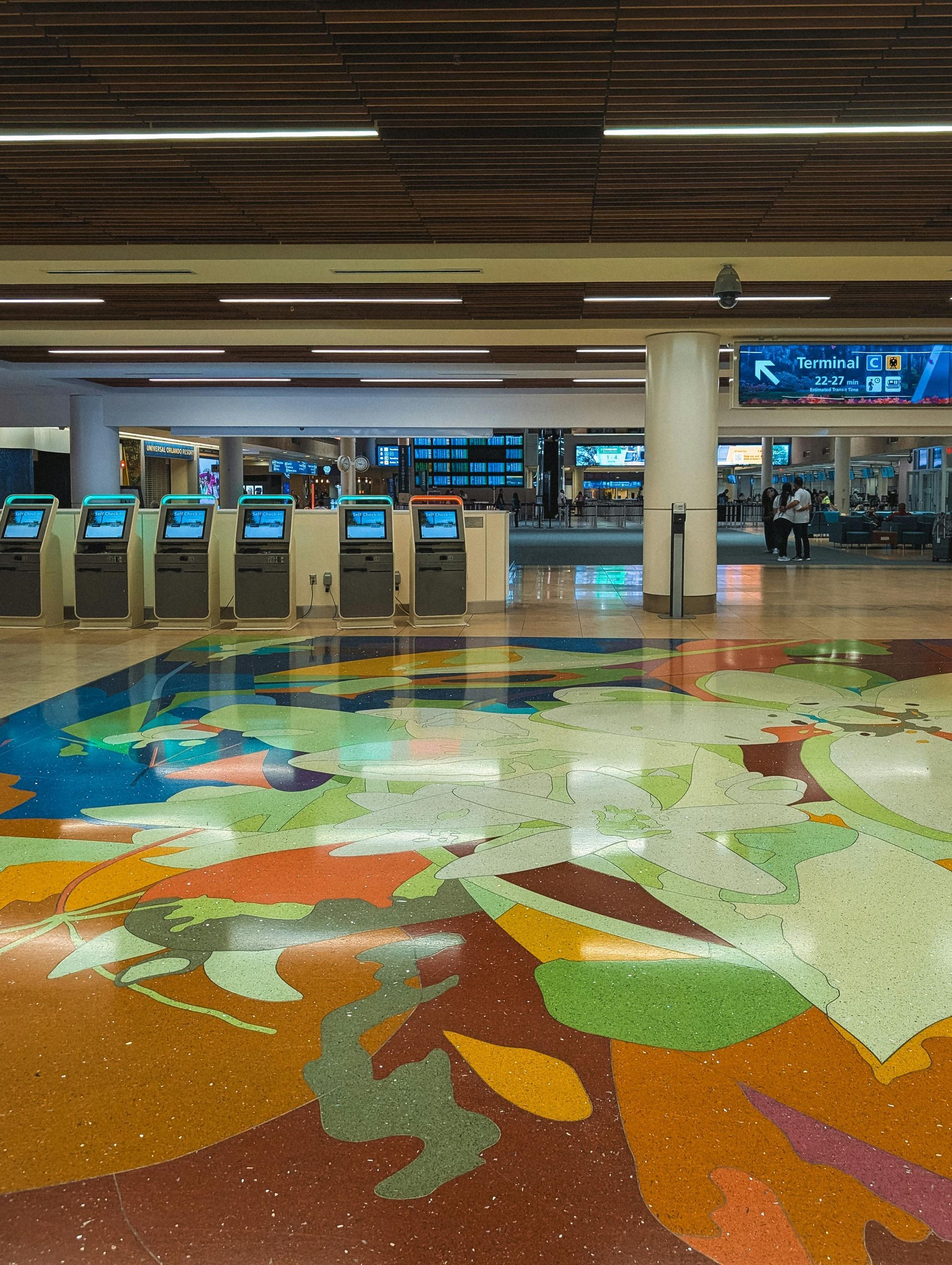
Cheney's commercial and retail environments face competition for customer attention within seconds of entry. North Mud & Painting installs large-format floor graphics that use dimensional visual effects to create eye-catching focal points, guide traffic flow, or reinforce branding through immersive designs applied directly to walking surfaces. The graphics employ forced perspective and shadow techniques to simulate depth, openings, or raised surfaces—effects that remain visible under the protective coatings required to handle constant foot traffic without delaminating or showing wear patterns.
Floor mural installation differs from wall applications in substrate preparation requirements and protective layering systems. Concrete floors need diamond grinding to remove sealers, moisture testing to confirm the slab won't transmit vapor that would lift adhesives, and profile creation that provides mechanical bonding surfaces. The printed graphic receives multiple layers of polyurethane or epoxy topcoats formulated to resist abrasion from grit carried on shoe soles while maintaining the clarity needed for the 3D effect to remain visible.
Arrange an evaluation to assess floor conditions and discuss design layouts that complement your space's traffic patterns.
What Changes After Installation Completes
Completed floor murals alter how people move through and interact with a space—directing attention to specific areas, slowing foot traffic where detailed viewing serves marketing purposes, or creating social media moments that extend brand reach beyond the physical location. The dimensional effects work best when viewed from standing height at typical approach angles, where the illusion of depth or elevation appears most convincing before perspective distortion becomes apparent from extreme angles.
You'll observe customers pausing to examine the imagery, adjusting their path to view the effect from different positions, or photographing the installation as part of their visit experience. The graphics remain visible under varied lighting—appearing crisp in daylight from storefront windows and maintaining contrast under evening interior lighting. Protective coatings create slip-resistant surfaces meeting commercial safety requirements while keeping the image visible rather than clouded by thick overlays.
Floor murals handle foot traffic differently than wall graphics, requiring wear-resistant topcoats that add texture for traction but reduce image clarity compared to smooth wall installations. The trade-off between durability and visual sharpness determines coating selection—showrooms with moderate traffic can use thinner, clearer coatings, while retail entries with heavy traffic need thicker, more textured systems that sacrifice some image detail for longevity. Expected traffic volume and cleaning methods affect whether the installation will maintain its appearance for years or require periodic recoating.
Answers to Frequent Service Questions
Floor mural projects involve durability considerations and installation requirements that differ significantly from other decorative graphics applications.
What floor types work best for 3D mural installations?
Smooth concrete slabs, terrazzo, and well-adhered vinyl tile provide stable substrates, while wooden floors that flex or ceramic tile with prominent grout lines create movement and surface variation that compromise adhesion and distort the image. Concrete floors in Cheney commercial spaces typically offer the most reliable base.
How long do floor murals maintain their appearance in high-traffic areas?
Commercial-grade installations with proper topcoat systems typically show minimal wear for two to four years in moderate traffic, while heavy retail traffic near entrances may require recoating within 18 months as the protective layers abrade and dull. Wear appears as loss of gloss and gradual image fading rather than sudden failure.
What maintenance affects floor mural longevity?
Regular dust mopping prevents grit accumulation that accelerates coating abrasion, while damp mopping with pH-neutral cleaners removes residues without attacking the protective layers. Avoiding floor scrubbers with aggressive brush heads prevents premature coating removal.
When should floor graphics be installed relative to other construction activity?
Installation should occur after all overhead work completes and after final floor cleaning but before fixtures are placed, allowing the coatings to cure without contamination from dust or accidental damage from ladders and equipment.
Why do some floor murals develop bubbles or lift at edges after installation?
Moisture vapor transmission through concrete slabs lifts adhesives when vapor barriers are absent or damaged, while inadequate surface preparation leaves contaminants that prevent proper bonding. Pre-installation moisture testing identifies slabs that need remediation before graphics are applied.
North Mud & Painting provides floor mural design, printing, and installation services for commercial properties throughout Cheney. Contact us to evaluate your floor conditions and develop a custom layout appropriate for your space and traffic levels.