3D Wall Murals
Visual Depth Without Structural Changes
3D wall murals in Coeur d Alene for modern interiors and commercial spaces needing immersive visual effects and dimensional impact
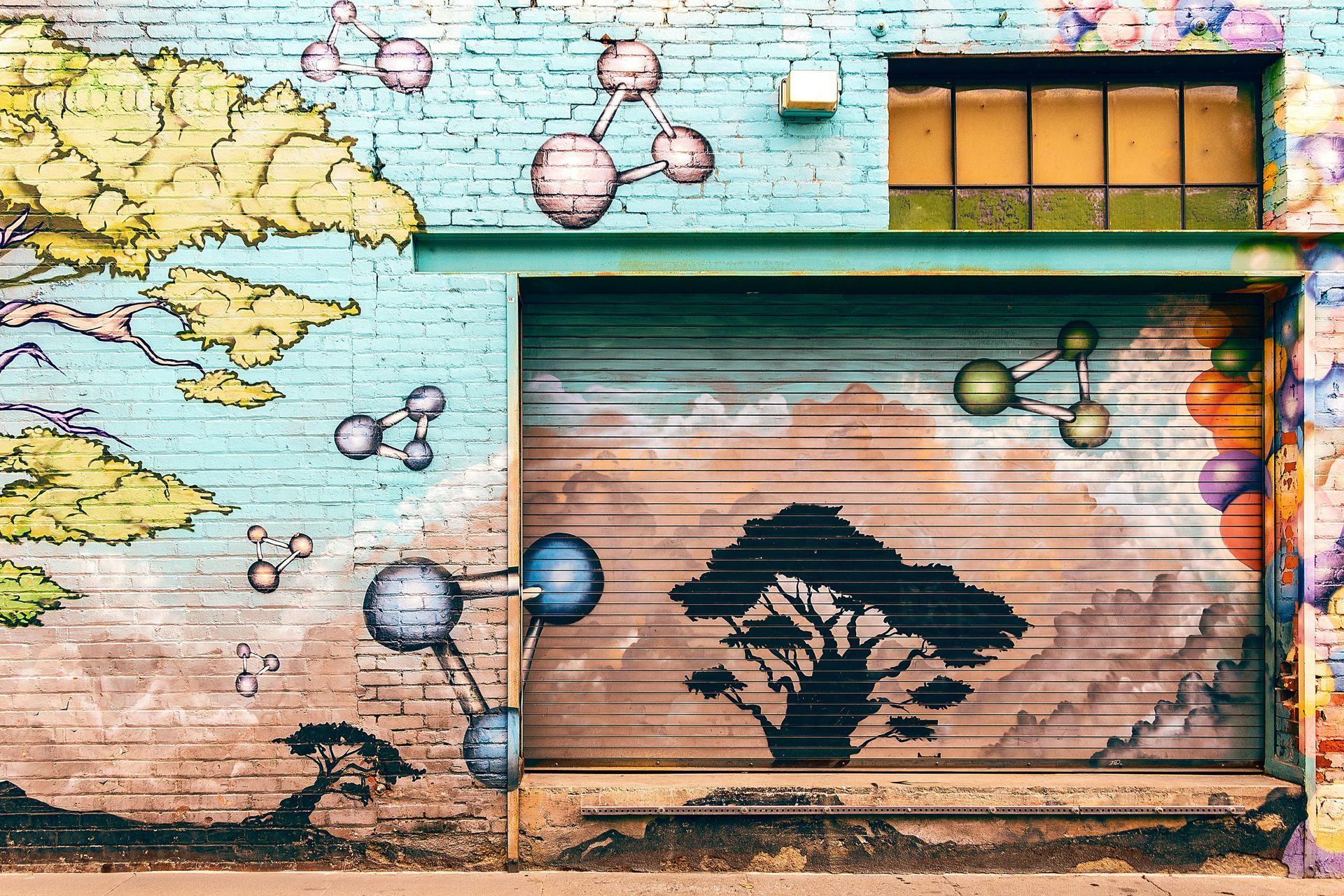
Large-format printed murals with dimensional visual effects create the illusion of depth, architectural features, or extended space where walls would otherwise remain flat. The technology relies on high-resolution printing that maintains image clarity at close viewing distances while using perspective techniques, shadow mapping, and tonal gradients to simulate three-dimensional forms. North Mud & Painting installs these printed graphics in commercial interiors, retail environments, and residential spaces where visual impact serves functional purposes—expanding perceived room dimensions, creating branded environments, or establishing thematic continuity across connected spaces.
Installation requires wall surfaces prepared to specific flatness tolerances, since even minor texture variations become visible beneath thin printed materials and distort the perspective illusions that create dimensional effects. The murals arrive as large panels printed on durable substrates designed to handle interior humidity fluctuations without curling at seams. Alignment during installation ensures perspective lines converge correctly and horizon lines remain level across multi-panel installations.
Schedule a site assessment to confirm wall conditions support large-format installation and discuss design options suited to your space's architecture.
How 3D Printing Addresses Visual Limitations
The printing process uses six-color or eight-color systems that reproduce fine tonal gradations critical to depth perception, particularly in shadow regions where insufficient color range results in flat, poster-like appearance. Resolution settings determine whether fine details like texture on simulated stone or wood grain remain sharp when viewed from arm's length. Material selection affects whether the finished surface reads as matte, which reduces glare and maintains the illusion under varied lighting, or includes subtle sheen that can add realism to certain subjects like water or glass.
After installation, you'll notice how the imagery appears to recede into the wall or project outward depending on the design's perspective construction—architectural elements seeming to extend hallways, landscape scenes suggesting windows opening to exterior views, or geometric patterns creating the appearance of recessed or raised surfaces. The effect remains consistent from the intended primary viewing angle but may flatten or distort when viewed from extreme side angles, which installation planning accounts for by positioning the mural relative to room entry points and typical viewing positions.
These printed murals differ from hand-painted work in their ability to reproduce photographic detail and maintain perfect symmetry in geometric patterns, making them suited to designs requiring precise replication of branding elements or architectural renderings. The approach works best in spaces with controlled lighting where the illusion can be optimized, while areas with highly variable natural light may benefit from designs that rely less on subtle shadow details for their dimensional effect.
Common Questions About This Service
Property owners considering 3D wall murals typically want to understand how the visual effects perform under different conditions and what installation requires.
What makes a 3D mural appear dimensional rather than simply being a printed image on a wall?
The illusion relies on forced perspective techniques, accurate shadow rendering that matches the room's lighting direction, and atmospheric perspective that uses color temperature and contrast reduction to simulate distance. Without these elements, the image remains flat despite the "3D" label.
How do printed murals hold up in high-traffic commercial spaces compared to painted walls?
Commercial-grade mural materials include scratch-resistant laminates and cleanable surfaces rated for repeated contact, though they remain less durable than painted walls and may show wear at edges or high-touch areas. Coeur d Alene retail installations benefit from protective coatings in areas near entry doors or checkout counters.
What wall preparation differences exist between standard paint jobs and mural installations?
Mural installations require filling even minor imperfections, sanding to a smooth finish, and priming with low-texture coatings, since the thin printed material reveals every surface irregularity. Standard paint applications can bridge minor flaws that would telegraph through printed graphics.
When does lighting need adjustment to optimize the 3D effect?
The illusion works best when primary lighting comes from the direction implied by shadows in the design. Conflicting light sources that cast real shadows opposite to printed shadows break the illusion and flatten the effect.
Why do some 3D murals look convincing in photos but less so in person?
Cameras capture from a single fixed perspective that matches the mural's designed viewing angle, while in-person viewing involves head movement and binocular vision that reveal the flat surface. Designs that rely on subtle depth cues rather than extreme perspective distortion maintain their effect better during normal viewing.
North Mud & Painting handles design selection, printing coordination, and installation for properties in Coeur d Alene and surrounding communities. Contact us to review your space and explore design options appropriate for your intended visual impact.